
Key takeaways
- Ownership of AI-Generated Art Is Complex and Evolving. AI-generated images can theoretically receive copyright protection if they involve sufficient human input, but current laws remain unclear, with many grey areas regarding AI Art copyright and ownership.
- Human Input Is Essential for Copyright Protection. The extent of human involvement in creating AI art plays a crucial role in determining ownership and the likelihood of avoiding legal challenges.
- AI Copyright Laws Are Still Developing. Copyright laws related to AI art are in their infancy, and different jurisdictions have varying regulations.
The challenge with AI art copyright
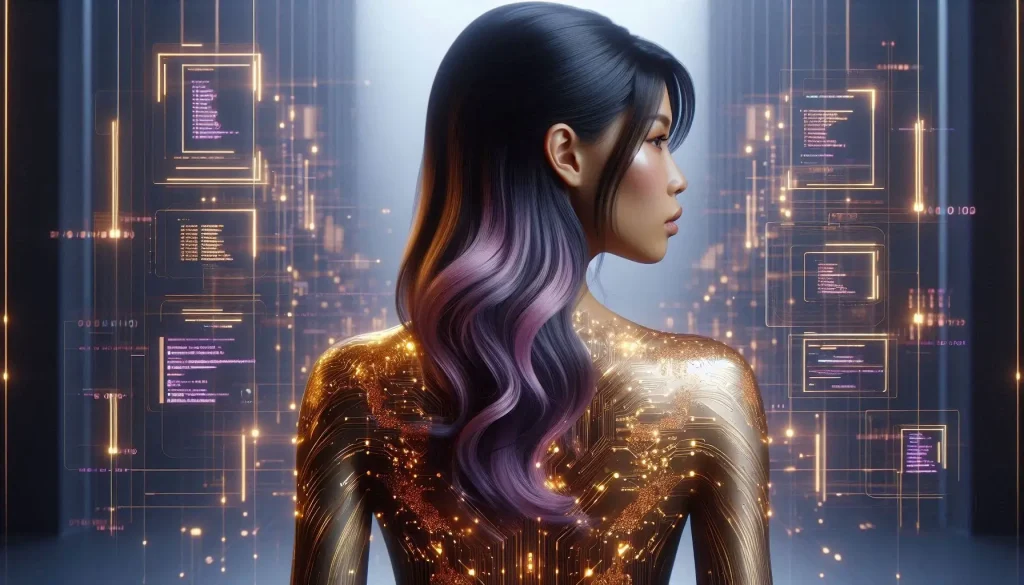
Can you replicate the image below? It’s unlikely, given the specific details in the prompt. But does this make it easier to copyright your AI-generated artwork? According to current copyright laws on AI-generated content, that appears to be the case. AI-generated art, like any other form of art, can receive copyright protection, but it presents additional complications. The key question is: who is the rightful owner? Is it the software’s creator, the individual who trained the AI, or the person who provided the prompt? Here’s what you need to know.

The copyright of AI art depends on the defined owner
Let’s be clear: we’re discussing the creation of AI-generated images based on prompts, not modifying an already copyrighted image. This has its own set of complications. Typically, the initial copyright owner and author of a photograph is the person who ‘shoots’ or ‘takes’ the photo.
In theory, this means you own and copyright your AI art, making it ideal for an effective yet efficient content marketing strategy. Moreover, with SEO becoming more complex, and an increasing need to focus on multi-channel SEO and get visibility in AI tools like AI Overviews, using AI art comes with obvious benefits.
However, the law is unclear, and many grey areas remain. How much of the image creation is based on your input? Moreover, who is the legal owner of an AI-generated picture?
As for ownership, OpenAI doesn’t claim any rights to AI-generated images. This suggests there’s little reason for concern in that regard. However, AI models may use copyrighted materials and the legality of doing so is debatable. On the other hand, it has been argued the Authors Guild v Google case outlined a potential use of copyrighted AI art providing it fell under ‘fair use’. This allows usage without the owner’s permission in certain cases.
Yet, the extent to which this is permissible is questionable. The EU AI Act mandates AI companies to outline their training data for their AI models. The aim is to prevent the use of copyrighted materials without permission. Consequently, the focus on what materials are used is growing. This is likely to fall into sharp focus over the coming years as AI reshapes online marketing and SEO.
Consequently, the interpretation of these laws is not straightforward, and ongoing lawsuits may challenge this view.
How much human input you provide is essential for ownership and potential lawsuits
Moreover, since AI is based on pre-existing input, and it’s illegal to copy other people’s work, you could theoretically face legal issues. For instance, Perplexity AI is already facing plagiarism charges. The outcome of this case may influence future legal battles. It’s likely that laws around AI art copyright will continue to evolve.
For now, it’s safer to add your own input when creating AI images. If you rely solely on ChatGPT to generate prompts, others have likely used the same prompts many times. As a result, the risk exists that numerous identical images are generated. This doesn’t mean you shouldn’t use AI for help.
It can be great for brainstorming. Yet it’s essential to include your own details and wording. The more personal input you add, the more unique your prompt and image will be. This also reduces the risk of legal challenges and could even increase your chances of copyrighting your AI art.
Moreover, it may also help increase the traffic to your content and avoid it being viewed as spam. Search engines like Google, while not banning the use of AI, are de-indexing SEO content that is mass-produced by AI. Consequently, it is imperative to humanise not only your text but also add value to your images. This is unlikely to change as AI continues to play a significant role in SEO over the next ten years and beyond.
Can you copyright your AI art?
Does this mean you own your AI-generated images as long as they’re based on your unique input? In theory, yes. The legality of AI content and images varies by jurisdiction, based on whether a human created the work and the extent to which it qualifies as ‘original.’
Therefore, as long as an image includes sufficient human input, the creator should, in principle, be the legal owner.
However, in one notable case, the human creator of AI-generated images did not obtain AI art copyright, despite having invested significant time and effort. The reason was the unpredictability of the AI’s output.
It’s important to note that this verdict was specific to images created on the Midjourney platform. Therefore, the outcome might have been different with other AI image-generation tools.
Furthermore, the laws surrounding AI-generated images are still in their infancy, and copyright regulations may evolve. The UK is unique in protecting works created solely by computers, which has sparked controversy, with some arguing that it undermines human creativity. On the other hand, there are ongoing debates about AI-generated work being misrepresented as human creations.
This discussion is likely to continue until more concrete laws are established. However, it’s worth noting that copyright regulations differ across the UK, EU, US, and other countries. It’s still too early to draw definitive conclusions.
The Future of AI Art copyright
Few could have predicted the direction Google would take when it was founded in 1998. Looking back, insisting that Yahoo remain the dominant search engine seems foolish. The future is often unpredictable, and forecasting the evolution of AI art copyright is equally challenging.
However, based on what we know today, incorporating as much of your own creativity and ideas as possible—rather than relying solely on AI—seems to be the best approach. This reduces the risk of infringing copyright laws. Moreover, it increases your chances of being recognised as the legal owner of your AI-generated images.
0 Comments